
What actually makes Montessori different?
The short answer: lessons are based on ability rather than age, and children learn concepts with materials they can hold in their hands.
A summary of the difference
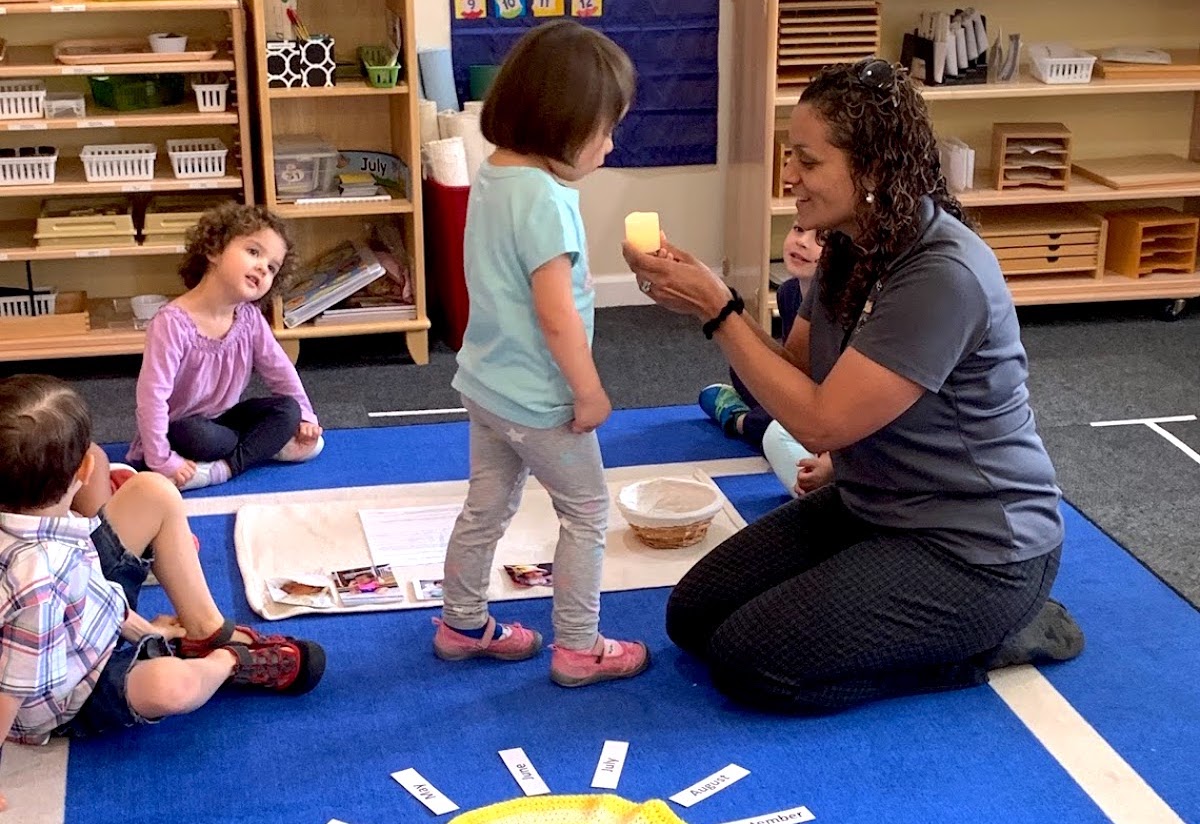
Dr. Maria Montessori developed the Montessori Method over 100 years ago. This scientific method consists of creating an environment that gives the child freedom to explore and achieve their highest potential. Each child is respected and observed individually so that they may progress at their own rate. Every area in the classroom is available to each child.
There are lessons throughout the classroom that satisfy the various levels of readiness in each child. This allows young children to learn about many things that they otherwise may have been exposed to at a much later age, if at all. They get a well-rounded education in a Montessori classroom. Sure, they learn traditional academics, but they also learn how to care for themselves and be independent, as well as exploring different cultures around the world. They learn about having respect for themselves, others and the environment they inhabit.
The classes are mixed ages, with children working at all levels based on their own specific individual ability. The older children become leaders in the classroom and the younger ones strive to be like them. The Montessori Method provides an environment that is supportive to a child who may struggle. At the same time, it allows another child to advance to work considered beyond their ability based on their age.
Book a Tour →Nine differences that show up every day
Each comparison below reflects how we actually run our classrooms at The Peace Rose.
Lessons are based on ability, not age. Master a lesson and move on; need more time and you get it.
The class moves through the same material at the same time.
Mixed ages, with children working at all levels based on their own individual ability.
Children are grouped by age.
Older children become leaders in the classroom and the younger ones strive to be like them.
The teacher leads the class from the front.
Concrete materials the child can touch, feel and see, moving towards the abstract idea behind them.
Memorization is the key to getting it right.
A full three-hour, uninterrupted work cycle, with art and science built into it.
The day is broken into short periods for separate subjects.
Every area of the classroom is available to every child, who chooses their own work within limits.
Children work where and when they are directed to.
None. A productive day at school means going home to enjoy family and after-school activities.
Homework is sent home, even in the early grades.
No grades, stickers or other rewards. The child’s best reward is the pride they feel in a job well done.
Grades, stickers and other external rewards.
Caring for themselves, for others and for the environment; conflict resolution; independence; other cultures.
Focused primarily on the academic curriculum.
Resource links
If you would like to research the method independently, these are the organisations we point families to.
- American Montessori Society — www.amshq.org
- Montessori Foundation — www.montessori.org
- North American Montessori Teachers’ Association — www.montessori-namta.org
- MariaMontessori.com — www.mariamontessori.com
You may also want to read our own guide to how to choose a Montessori school — written because anyone can put Montessori materials on a shelf and use the name.
- Visit us
- 3079 Bordentown Avenue
Parlin, New Jersey 08859
- Call or text
- 732-518-8745
- admin@thepeacerose.com
- Hours
- Monday to Friday, 7:30 a.m. to 6:00 p.m.
Half-day and full-day programs, with extended care on both ends of the day.
Judge it for yourself, in person
Sit in a classroom during the work cycle and the difference is obvious.
Yes, I want to book a school tour →